Real-world evidence (RWE) is no longer a secondary data source, it’s becoming a core input in oncology treatment decisions. In a new survey of Canadian and U.S. oncologists, MD Analytics explores how RWE is being used in clinical practice, the scenarios where it’s most valuable, and what challenges still exist in applying it effectively. Our latest infographic reveals where oncologists see the greatest benefit from RWE, how it supports complex decision-making, and what pharmaceutical companies can do to improve access, data quality, and clinical relevance....
A recent survey of oncologists in North America reveals a rising trend: more patients are being diagnosed with solid tumor cancers at a younger age. Backed by recent epidemiological studies, this shift is particularly evident in breast and colorectal cancers. This demographic change is expected to impact treatment strategies, patient management, and how pharmaceutical companies support and communicate with younger patients. Explore the infographic to learn more about the implications for oncology care....
We are excited to share some of the results of our latest independent study on patient perceptions of pharmaceutical companies and the impact of Patient Support Programs (PSPs). Our findings highlight the crucial role PSPs play in enhancing trust and satisfaction among patients. Explore our latest infographic to discover more about the importance of these programs and their influence on patient experiences....
Vaccines have been an almost inescapable topic across the media since COVID-19. Now, four years out from the start of the pandemic, we wanted to better understand vaccination rates and explore those that are most sought out by the general public. This independent study explores American and Canadian experiences with vaccines. MD Analytics surveyed 1000 people in each country, and the results highlight high vaccination rates and the crucial role pharmacies play in providing access, especially for flu and COVID-19 vaccines. View our latest infographic to discover findings on vaccination trends and the opportunities for increasing awareness and uptake of...
Physician specialists are not all alike! MD Analytics surveyed 100 Canadian physician specialists on topics such as work-life balance, patient care, pharma companies, technology, and information sources to identify attitudinal differences to help pharma marketers more effectively communicate with their target audience. Four segments emerged....
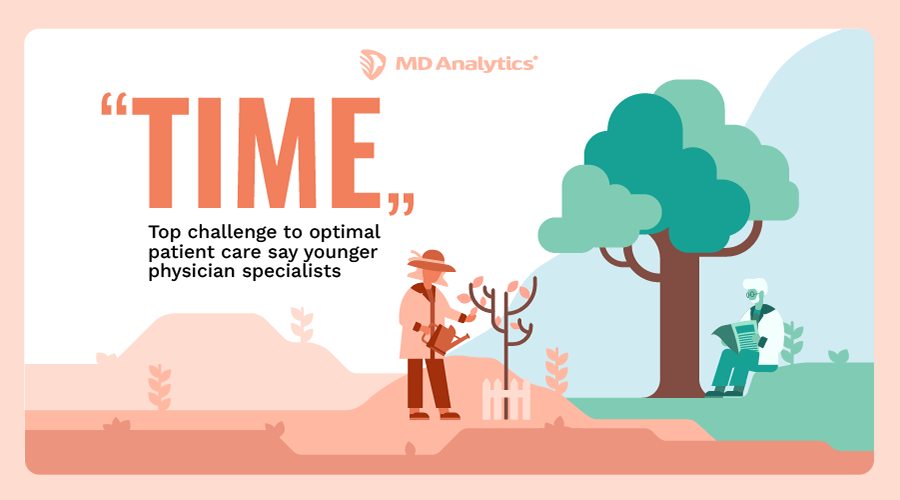
Key insights have emerged in a new study conducted by MD Analytics in terms of differences in how younger and older Canadian physician specialists perceive aspects of patient care. Building on previous findings that showcased generational differences among primary care physicians, MD Analytics conducted a follow up study in March of 2023 that included a mix of 100 Canadian physician specialists. The overall objective of this study was to determine the extent to which a generational gap may exist in approaches to treatment and patient management. In our analysis, we divided specialists into two groups: younger physicians, those under 45,...
Key insights have emerged in a new study conducted by MD Analytics regarding perceived work life imbalances among younger and older Canadian physician specialists. As a prelude to the latest data, we reflect on previous research we conducted with physicians in October of 2022 which showed that the majority of specialists in Canada felt overwhelmed and burned out compared to pre-pandemic times. While this is true across medical specialties, the data also hinted that this feeling may be more pronounced based on age....
Market research plays a fundamental role in helping those involved in the healthcare market answer key questions about their brands. Gaining insights from healthcare practitioners is central to market research. However, engaging physicians to participate in research can be a challenge. While most of the surveyed physicians say they enjoy participating in market research studies, in practice, physicians self-report participating in less than half of the number of studies they are invited to participate in. Real-world experience from our panel says the response rate is even lower. With this in mind, we asked Canadian physicians to help us understand what...
Engaging prescribers is a key component to the launch of any new brand. But what are the key components that drive interest for physicians in learning more? Overall, physicians express greater satisfaction when learning about new products through in person interactions compared to virtual or digital interactions. However, regardless of how they learn about new product, the types of resources physicians prefer are similar. The top most preferred resources for both GPs and Specialists include presentation at conferences, discussions with peers, educational events that include KOLs or treatment areas experts, presentations by lead authors, journal clubs and discussions with Pharmaceutical...
The COVID-19 pandemic had a significant impact on physicians, including how they learn about and integrate new products into their practice. While not all saw a decline, close to 1 in 3 Specialists and close to half of GPs say their use of newly launched products declined during the pandemic, primarily due to a lack of pharma presence, reduced patient volumes overall and just a general lack of comfort using new products....
Ready to explore how data-driven insights can accelerate your pharmaceutical research? Connect with our team to discuss your goals.
We use cookies to collect information to help us personalize your experience and improve the functionality and performance of our site. By continuing to use our site, you consent to our use of cookies. For more information, see our Cookies Policy.